
Falling in a Dream: What's Really Happening to Your Consciousness
It's not about failure. It's not about anxiety. The Universal Language of Mind reveals that falling dreams are not a symbol at all — they're the actual experience of your consciousness moving between levels of mind.
You're somewhere high — the edge of a building, the side of a cliff, the top of a staircase — and then you're falling. There's no warning. No transition. Just the sudden, sickening plunge. Your stomach drops. The wind rushes past. And just before you hit the ground, you jolt awake, heart pounding, muscles clenched, gasping.
Almost everyone on Earth has experienced this dream. It's one of the most universal human experiences across every culture, age, and background. And every dream interpretation site will tell you the same thing: it means you're afraid of losing control. You're anxious. You're overwhelmed. You're failing at something.
They're all wrong. Not partially wrong. Fundamentally wrong. They're interpreting the emotion of the dream without understanding the mechanism behind it. The Universal Language of Mind — a symbolic science studied for over 5,000 years — reveals that falling in a dream is not a symbol at all. It's an actual experience of consciousness.
In the Universal Language of Mind, falling represents your consciousness moving from the inner levels of mind back toward the conscious mind of the physical. It is not a metaphor for failure. It is the literal experience of your awareness descending from a deeper inner level — the mental, astral, or emotional planes — back toward the outermost physical level. The jolt you feel upon waking is your consciousness reconnecting with the physical body.
Understanding the Levels of Mind
To understand the falling dream, you need to understand how consciousness moves. You are not just a physical body with a brain that produces thoughts. You are a multi-dimensional being with multiple levels of mind, each operating at a different vibrational frequency.
Your Dreams Have a Message For You
Chitta interprets your dreams using the Universal Language of Mind — a 5,000-year-old methodology no other app offers.
Try Chitta Free →When you are awake, your consciousness is operating within the conscious mind — the outermost, physical level. This is where you interact with the three-dimensional world, where you make decisions, where you experience daily life.
When you fall asleep, your consciousness does not simply shut off. It moves inward — from the physical level into deeper levels of the subconscious mind. These inner levels include the emotional level, the lower astral level, the upper astral level, and the mental level. The deeper you go in sleep, the further inward your consciousness travels.
Your dreams occur within these inner levels. The images, scenarios, and symbols you experience while dreaming are the contents of these inner planes — they are the thought forms, seed ideas, and impressions stored within your subconscious mind.
"Falling is not a symbol of failure. It is the actual experience of your consciousness moving between levels of mind — specifically, descending from a deeper inner level back toward the outermost physical level."
— Tarak Uday, Dream Symbol DictionaryWhat Actually Happens When You "Fall"
When something triggers a shift back toward waking consciousness — a noise in the room, a change in your sleep cycle, an alarm, or even a sudden spike in conscious mind activity — your consciousness begins its descent back through the levels toward the physical body.

Go Deeper
"Life is But a Dream" is your complete guide to the Universal Language of Mind — the ancient dream interpretation system referenced in this article.
This descent is experienced as falling because you are literally moving from a higher vibrational level to a lower one. Think of it like descending floors in a building. Your consciousness was operating on the 5th floor (a deep inner level), and now it's rapidly dropping back to the ground floor (the physical body).
This is why the falling dream so often jolts you awake. The falling ends the moment your consciousness re-enters the physical body and the physical level of mind. The jolt you feel is the reconnection — your awareness snapping back into the body after operating outside of it.
The sudden jolt that wakes you during a falling dream is not a fear response. It is the physical sensation of your consciousness re-entering the body. You were operating on an inner level, something triggered a return, and the rapid descent back to physical awareness creates the "jolt" — the reconnection between your consciousness and your physical vehicle.
Why Every Other Interpretation Is Wrong
Here's why "fear of failure" and "loss of control" don't hold up: if falling were a symbol for failure or anxiety, your subconscious mind would use other, more specific images to convey that message. It could show you failing a test, dropping something important, being demoted, or watching something break. The subconscious is infinitely creative in how it constructs symbolic messages.
Falling is different from other dream symbols because it's not purely symbolic — it's experiential. You're not watching yourself fall in a metaphor. You're experiencing the actual sensation of your consciousness in motion between levels. This is why the dream feels so viscerally real — because on a certain level, it is real. Your consciousness really is moving.
This is also why the falling dream is so universal. It's not tied to personal circumstances, individual fears, or cultural conditioning. Every human being with a consciousness that moves between levels during sleep has the potential to experience the sensation of falling during the return. It's a feature of how consciousness operates, not a reflection of personal psychological problems.
Understand How Your Consciousness Moves
Chitta uses the Universal Language of Mind to interpret your dreams — revealing the deeper mechanics of consciousness that no surface-level interpretation can access.
Try Chitta Free →What the Quality of the Fall Tells You
Rapid, terrifying fall with a jolt awake
This indicates an abrupt, uncontrolled shift back to physical consciousness. Something external disrupted your inner-level experience — a noise, an alarm, a physical sensation. Your consciousness was pulled back rapidly without a smooth transition.
Slow, gentle descent
This reflects a gradual, controlled return to waking awareness. Your consciousness is moving between levels with some degree of smoothness. This often happens during natural sleep cycle transitions rather than external disruptions.
Falling from a great height
You were operating at a very deep inner level. The greater the height, the deeper the level your consciousness had reached before being pulled back. Falling from a skyscraper or a cliff indicates your consciousness was operating at the mental or upper astral levels — quite deep into the inner mind.
Your Dreams Have a Message For You
Chitta interprets your dreams using the Universal Language of Mind — a 5,000-year-old methodology no other app offers.
Try Chitta Free →Falling from a short height
You were at a level closer to the physical. A short fall — stumbling off a curb, falling out of a chair — suggests your consciousness was at the emotional level or lower astral, closer to waking awareness.
Falling and landing safely
A smooth reconnection with the physical body. Your consciousness completed the transition without the jolt — this indicates developing stability in how you move between levels of mind.
Falling and never hitting the ground
Your consciousness was interrupted mid-descent — you woke up before the full reconnection. The falling was still in progress when external awareness kicked in.
"As your concentration strengthens, your ability to move between levels with awareness and intention increases. Eventually, the fall becomes a flight — you learn to navigate the descent consciously rather than being jolted back to the physical against your will."
— Tarak Uday, Dream Symbol DictionaryFrom Falling to Flying
Here's the most exciting implication of understanding the falling dream: it reveals that your consciousness naturally moves between levels. You're already doing it every night. The falling dream is proof.
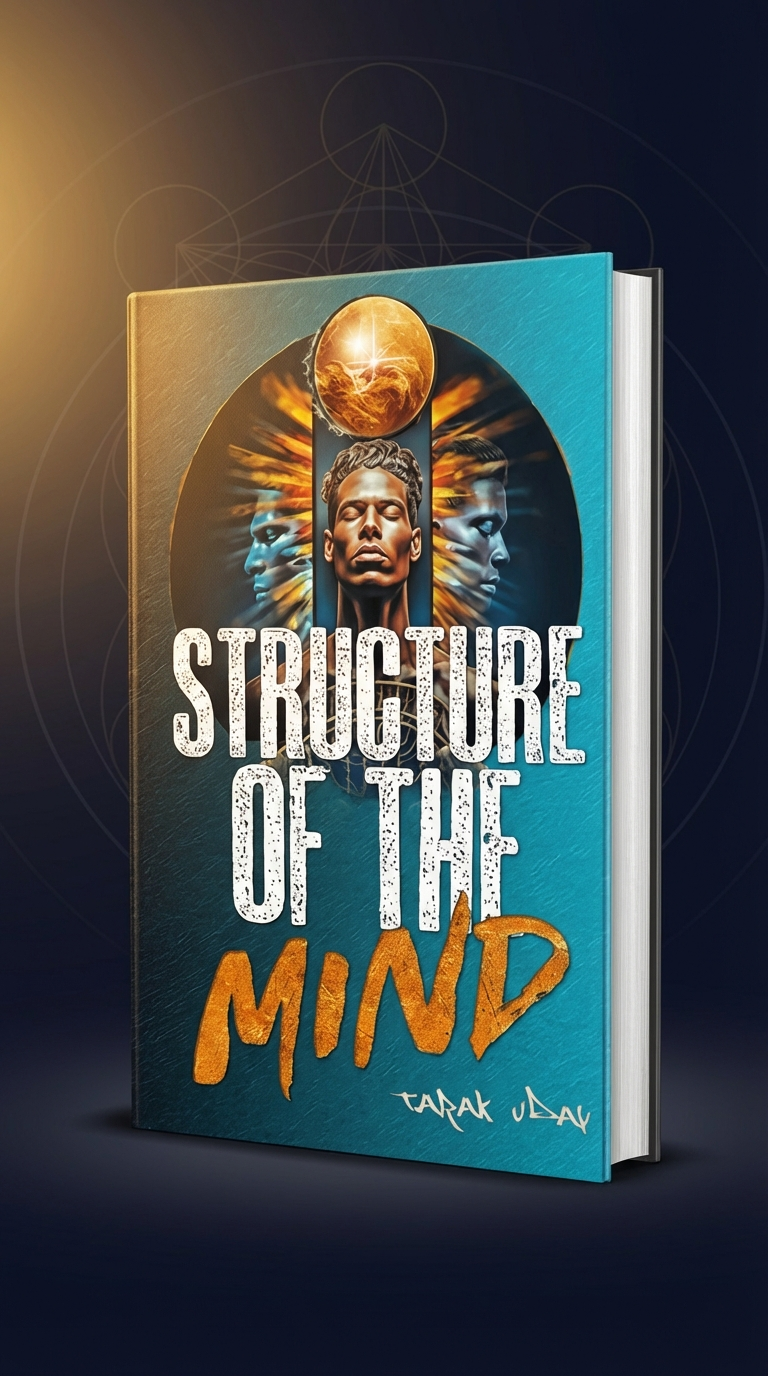
Understand Your Own Mind
"Structure of the Mind" reveals the three divisions of mind, seven levels of consciousness, and powers of mind that most people never learn to develop.
The difference between falling and flying is conscious control. Falling is the unconscious, uncontrolled descent. Flying is the conscious, intentional navigation of the same levels of mind. Both involve your consciousness moving — but in one you're at the mercy of the motion, and in the other you're directing it.
When you develop concentration — real, sustained, focused attention — you develop the ability to navigate these transitions consciously. The falling dream transforms. Instead of the terrifying plunge and the jolt awake, you begin to experience controlled movement between levels. This is the beginning of conscious inner travel.
What to Do After a Falling Dream
1. Recognize what actually happened
You weren't experiencing a metaphor for failure. Your consciousness was moving between levels of mind. Acknowledge this — it shifts your entire relationship with the dream.
2. Note the quality of the fall
Was it rapid or gradual? From a great height or a short one? Did you jolt awake or land smoothly? These details tell you how deep your consciousness went and how smoothly the transition occurred.
3. Identify what triggered the return
Was there an external noise? A physical sensation? Did your alarm go off? Understanding the trigger helps you understand the abruptness of the descent.
4. Develop concentration daily
This is the key practice. Concentration strengthens your ability to maintain awareness during transitions between levels of mind. The stronger your concentration, the more control you have over how you move through these levels — turning unconscious falling into conscious navigation.
5. Practice breath awareness before sleep
Conscious breathing before sleep creates a bridge between waking awareness and the inner levels. It smooths the transition and increases the likelihood of maintaining awareness as your consciousness moves inward.
Develop Conscious Control of Your Mind
Chitta provides concentration training, AI-powered dream interpretation, and Oracle guidance — the foundational practices for developing awareness across all levels of mind.
Start Your Practice Free →The Bottom Line
Your falling dream is not about failure. It's not about anxiety. It's not about losing control of your life. It is the direct experience of your consciousness moving between the inner levels of mind and the outer physical level.
Every human being travels these levels every night during sleep. The falling sensation is what happens when the return to the physical body is abrupt or uncontrolled. The jolt is the reconnection. The fear is simply the conscious mind's reaction to a process it doesn't understand.
Your Dreams Have a Message For You
Chitta interprets your dreams using the Universal Language of Mind — a 5,000-year-old methodology no other app offers.
Try Chitta Free →Now you understand it. And with that understanding comes the possibility of transforming the experience entirely — from an unconscious, terrifying fall into a conscious, intentional navigation of the levels of your own mind.
The fall is proof that you are more than your physical body. Your consciousness moves. The question is whether you'll learn to direct it.
GO WITHIN>>> OR GO WITHOUT!
PEACE.